
The Strategy Canvas.
Our strategy interface, in two modes. On the making canvas the people and the agents build a strategy. On the playing canvas they run it. Both sit on the client's own files, and the client keeps them.
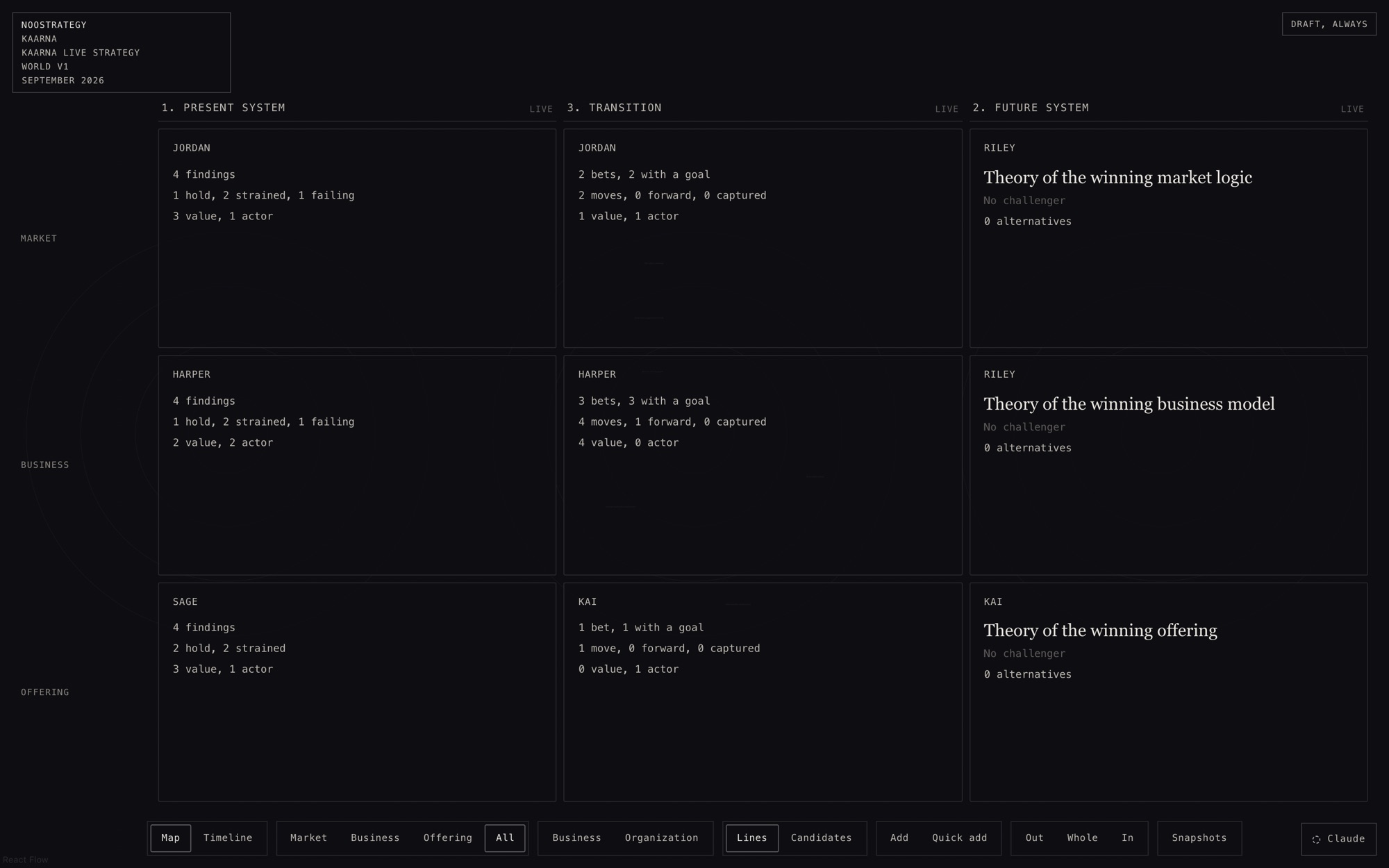
Making the strategy.
The making canvas follows the method. It draws the present system, the transition and the future system. The agents draft into it, each draft a proposal with its reasoning. People accept or reject every proposal, and a theory is chosen or dropped in a session, by name and with a reason. Every change is kept, so every decision can be traced and undone.
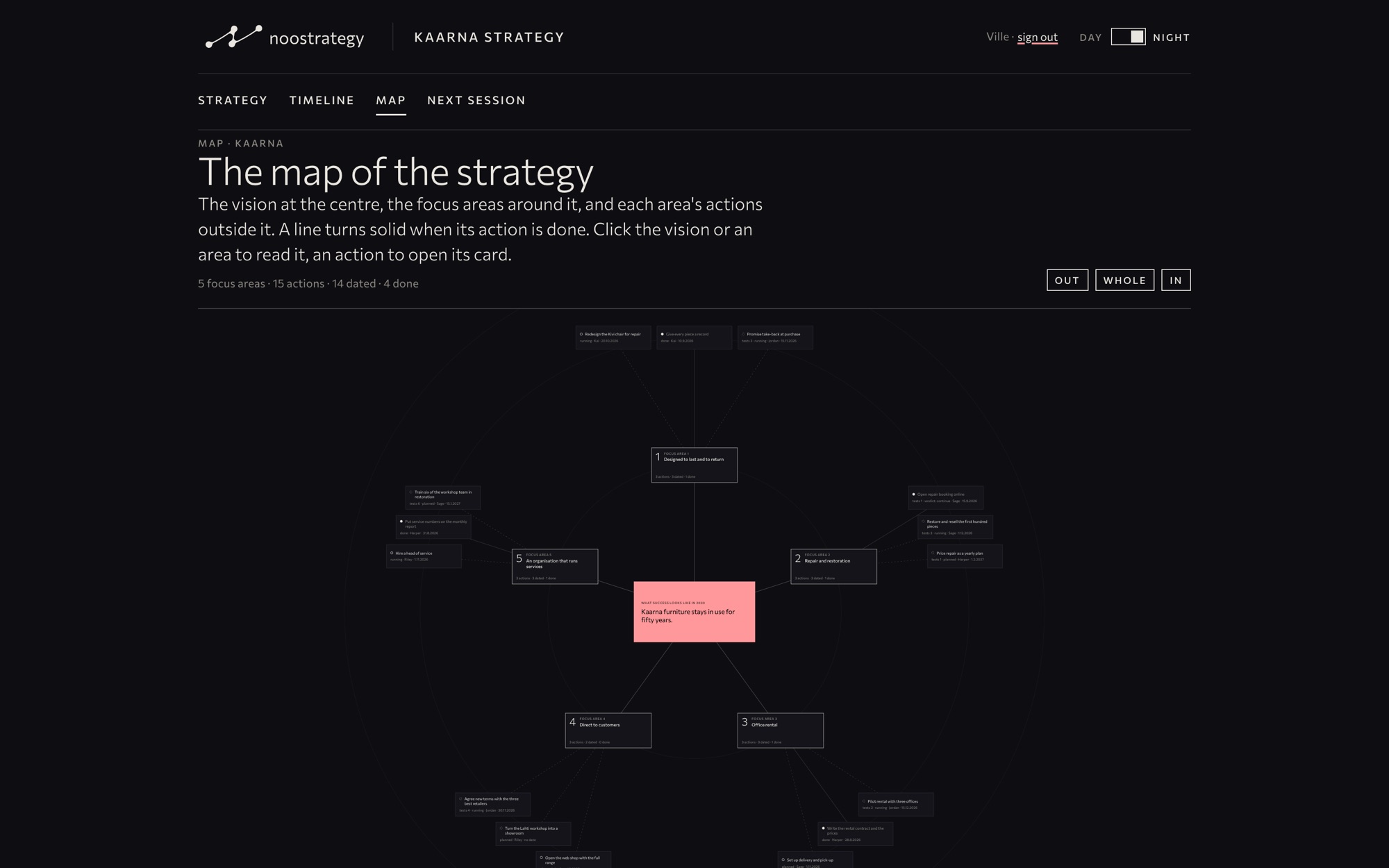
Playing the strategy.
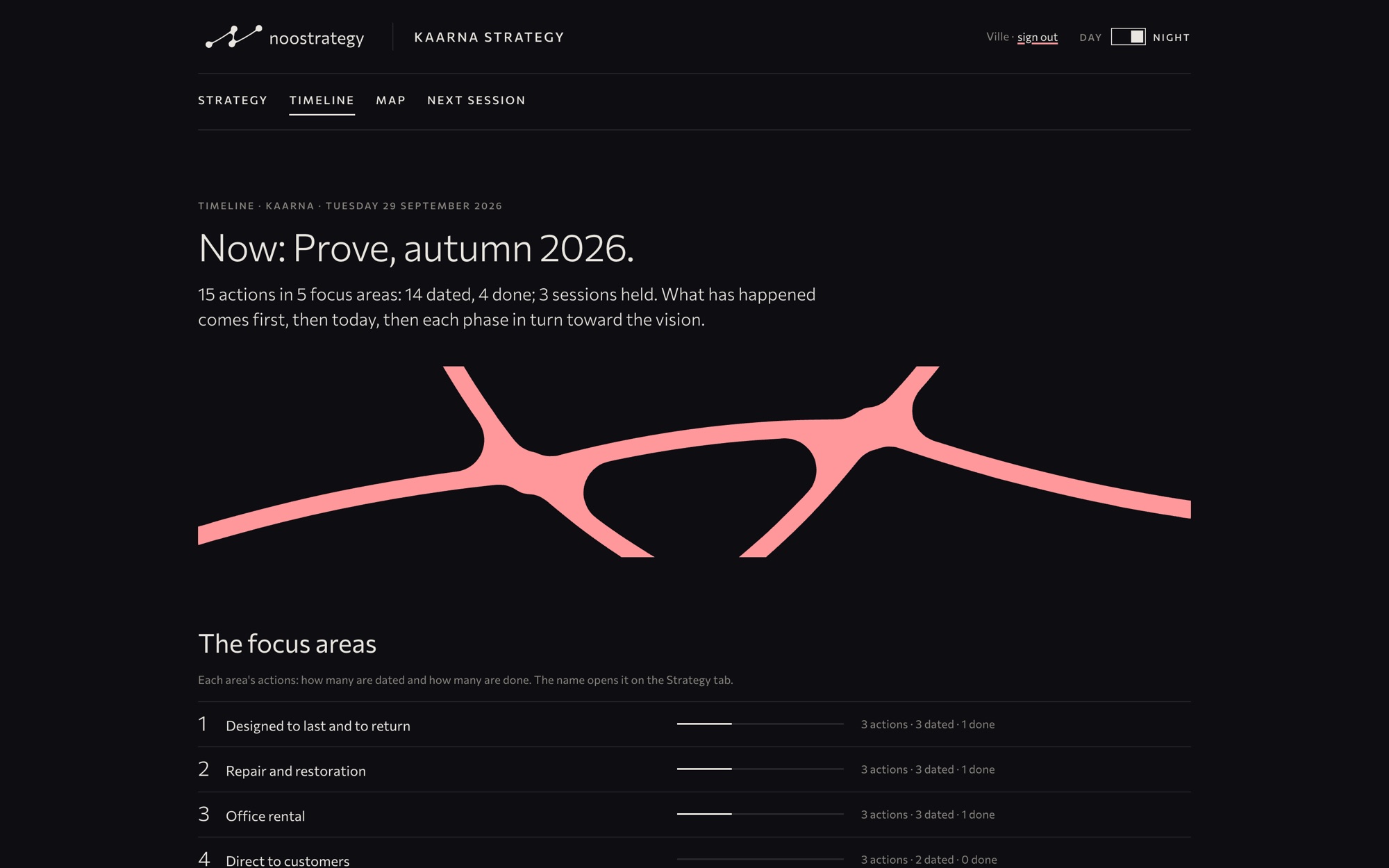
Once the strategy is decided, the playing canvas opens on the strategy itself, a site the whole team works with from a laptop or a phone. The strategy as decided, with its focus areas and their actions. A timeline of what is done and what comes next. A map of the vision, the focus areas and the actions. The next session, with its agenda, the commitments people made and the record of what they decided.
- Progress you can see. The strategy, its timeline and its map show what is moving, what is due and what the evidence says, as it happens.
- Adjusted on the go. A move that hits its stop rule stops, a new bet goes in at the next session, and the whole strategy shows the change at once.
- It learns. Every result is read against the threshold set before the move ran, and the theory is revised on the evidence.
- It adapts. Between sessions the agents read the market and the team's material, and flag the shifts that put the theory under pressure.
- It answers back. Ask the strategy a question and it answers from its own record, citing the cards it rests on.
That changes both how a strategy works and how people work with it.
Read.
- Live StrategyThe method the canvas plays.
- The Strategy EnsembleWho does what on the canvas.